
Skin Basics · 4 min read
Oily Skin vs Dehydrated Skin: How to Tell the Difference
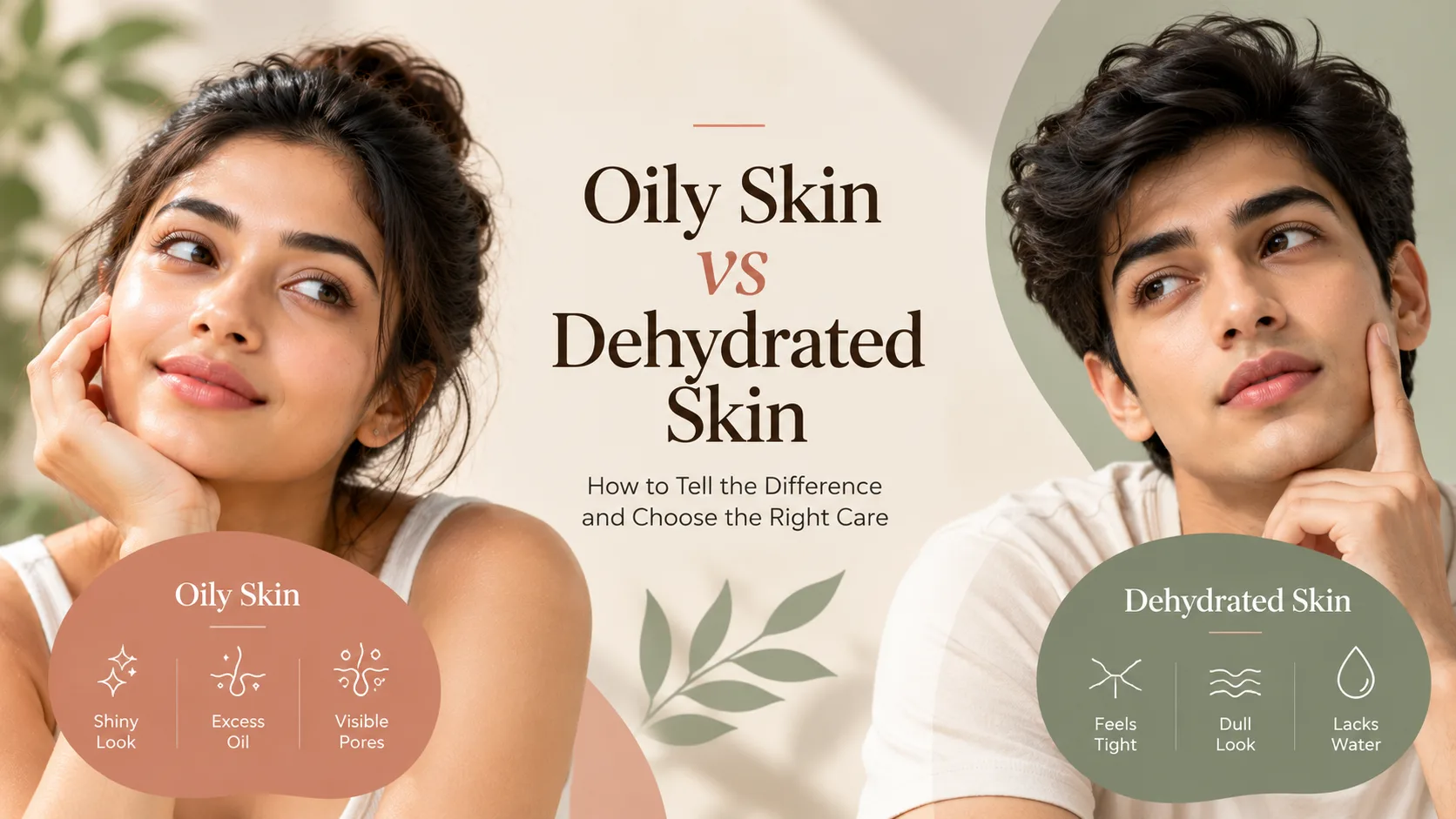
Does your face look oily but still feel tight or uncomfortable? You might think your skin needs less moisture. But sometimes, the problem isn't too much oil — it's a lack of water.
Oily skin and dehydrated skin are often confused. Understanding the difference can help you choose products that feel better and work more comfortably with your skin.
1. What Is Oily Skin?
Oily skin produces more sebum, the natural oil that helps protect your skin.
Common signs include:
- A shiny forehead, nose or chin
- Skin that becomes greasy during the day
- More noticeable pores
- A tendency towards blackheads or breakouts
Oily skin is a skin type. It doesn't mean your skin is unhealthy, and it still needs moisturiser.
2. What Is Dehydrated Skin?
Dehydrated skin lacks sufficient water, rather than oil.
Common signs include:
- Tightness, especially after washing
- A dull or tired-looking appearance
- Fine lines that seem more noticeable
- Roughness or discomfort
Dehydration is a skin condition that can affect any skin type, including oily skin.
3. Can Your Skin Be Oily and Dehydrated at the Same Time?
Yes! Your skin can produce plenty of oil while still lacking water.
For example, your forehead may become shiny by afternoon, but your cheeks may feel tight after cleansing.
This can happen when you use harsh cleansers, wash too frequently, overuse exfoliating products or spend long hours in air-conditioned environments.
4. How Can You Tell the Difference?
| Oily Skin | Dehydrated Skin |
|---|---|
| Looks shiny or greasy | Often feels tight |
| Produces excess oil | Lacks water |
| May have visible pores | May look dull or feel rough |
| Usually an ongoing skin type | Can be temporary |
Remember: These signs are clues, not a diagnosis. Both conditions can occur together.
5. How Should You Care for Your Skin?
You don't need a complicated routine. Start with three simple steps.
Step 1 — Cleanse gently
Choose a mild cleanser that removes dirt, sweat and excess oil without leaving your skin feeling stripped or tight.
Step 2 — Moisturise daily
Even oily skin needs moisture. A lightweight gel or lotion may feel more comfortable, especially in hot and humid weather.
Look for hydrating ingredients such as glycerin or hyaluronic acid. If your skin feels dry or irritated, a moisturiser containing ceramides may also be helpful.
Step 3 — Protect with sunscreen
Use a broad-spectrum SPF 30 or higher during the day. Choose a texture you enjoy wearing so that daily use becomes easier.
If your skin feels irritated, temporarily reduce strong exfoliants and avoid adding too many new products.
The Vibird Takeaway
Oily skin needs balance. Dehydrated skin needs hydration. And sometimes your skin needs both.
Instead of choosing products only because they say “oil control” or “hydrating,” pay attention to how your skin looks and feels throughout the day.
At Vibird Skin Studio, we believe good skincare starts with understanding your skin — not with buying more products.
Find your balance. Keep your routine simple.
*This article is for general skincare education. Persistent irritation, significant redness or other concerning skin symptoms should be assessed by a qualified healthcare professional.