
Ingredients · 4 min read
Gel, Cream or Lotion: How to Choose the Right Moisturiser for Your Skin
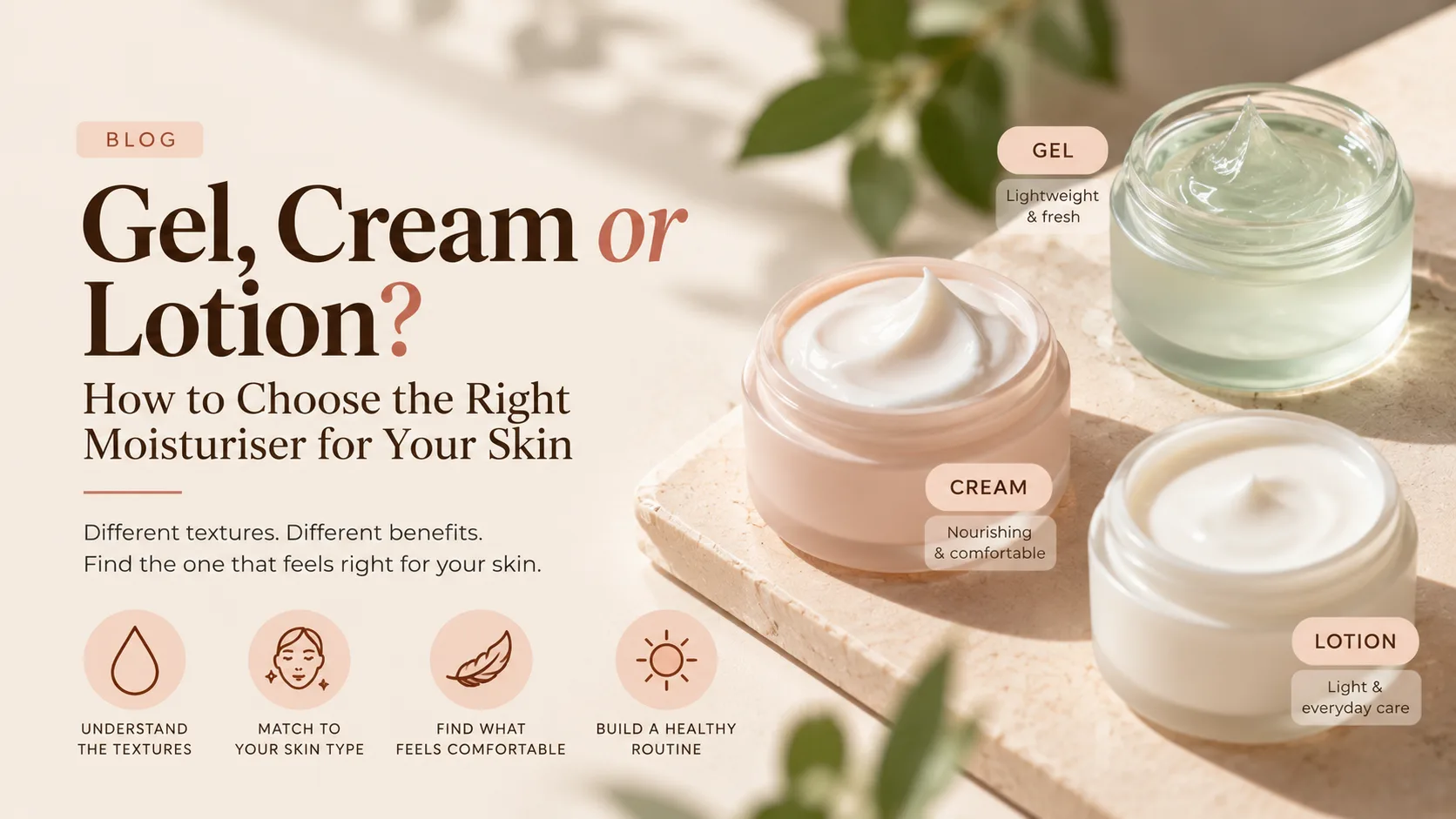
Have you ever bought a moisturiser that felt too sticky, too heavy or simply uncomfortable?
The problem may not be the moisturiser itself. Sometimes, it's the texture that doesn't suit your skin or your daily environment.
Moisturisers come in different forms, including gels, lotions and creams. Understanding these differences can help you find one you'll enjoy using every day.
1. Gel Moisturiser — Light and Refreshing
Gel moisturisers usually have a lightweight, water-rich texture. Many absorb quickly and leave less of a greasy feeling.
May suit:
- Oily or combination skin
- People who dislike heavy products
- Hot and humid weather
Keep in mind: Some gels may not provide enough lasting comfort for very dry skin.
2. Lotion — Light but Moisturising
Lotions usually have a fluid, easy-to-spread texture. They often contain a balance of water and oils, providing hydration without feeling as rich as many creams.
May suit:
- Normal or combination skin
- Everyday face and body moisturising
- People who want something between a gel and a rich cream
Lotions are a useful option when you want comfortable hydration without a heavy finish.
3. Cream — Richer and More Protective
Cream moisturisers are often thicker and contain more ingredients that help soften skin and reduce moisture loss.
May suit:
- Dry or very dry skin
- Skin that feels tight or rough
- People spending long hours in air-conditioned environments
Keep in mind: A rich cream may feel heavy on some oily skin types, especially in humid weather.
4. Which Moisturiser Should You Choose?
| Your Skin or Preference | Texture to Explore |
|---|---|
| Oily skin, dislikes greasiness | Lightweight gel or gel-cream |
| Normal or combination skin | Lotion or gel-cream |
| Dry, tight-feeling skin | Cream or richer lotion |
| Hot, humid weather | Lightweight, comfortable textures |
| Long hours in air-conditioning | A moisturiser that provides lasting comfort |
These are starting points, not strict rules. A well-formulated gel-cream may moisturise better than a poorly formulated rich cream.
5. What Ingredients Should You Look For?
You don't need to memorise a long ingredient list. Start with a few useful names:
- Glycerin: Helps attract and retain water in the skin.
- Hyaluronic acid: Helps support skin hydration.
- Ceramides: Help support the skin's protective barrier.
- Petrolatum or dimethicone: Help reduce moisture loss and protect the skin.
Remember, the complete formula matters more than any single ingredient.
6. A Simple Way to Test a Moisturiser
When trying a new product, ask yourself:
- Does it spread easily?
- Does it feel comfortable after a few minutes?
- Does my skin still feel comfortable later in the day?
- Does it work well under my sunscreen?
If you have sensitive skin, introduce new products cautiously and patch-test first.
The Vibird Takeaway
The best moisturiser isn't always the richest or most expensive. It's the one that gives your skin the moisture it needs and feels comfortable enough to use consistently.
In hot and humid places like Kerala, texture can make a big difference to your daily skincare experience.
At Vibird Skin Studio, we believe skincare should feel as good as it works.
Choose the right texture. Keep your skin comfortable. Make skincare simple.
*This article is for general skincare education. Persistent irritation, severe dryness or other concerning skin symptoms should be assessed by a qualified healthcare professional.